Nitwit Snowchildren
Wednesday, December 15, 2010 0 comments
Well don't know about you but I'm totally weary with all this Christmas malarky, haven't been able to keep up with the blogging, running at the coos tail once again this year, so shattered. My hubby asked if I had done something which I don't recall saying I would, when I said I hadn't, he said what have you been doing! Men. Think it's time he had a go at cards and shopping, oh maybe not, don't

Google Body Browser
0 comments
Google has recently demoed an interesting WebGL application called Body Browser, which lets you explore the human body just like you can explore the world in Google Earth. Now you can try Google Body Browser before it's added to Google Labs, assuming that you have a WebGL-enabled browser:
* WebGL is available, but not enabled by default in Chrome 8 (the latest stable version). Type about:flags in the address bar, click "Enable" next to "WebGL" and then click on "Restart now". Please note that this is an experimental feature in Chrome 8.
* WebGL is enabled by default in Chrome 9 Beta, Chrome 9 Dev Channel, Chrome Canary Build and Firefox 4 beta.


Damon Hernandez was surprised to notice that the application doesn't require a plugin. "Unlike other web based medical applications I have seen, no Flash, Java, or other plugins are needed. This application will run on any WebGL supported browser. (...) Last year I got the opportunity to work on an open standards based web3D medical app for learning the bones of the body. After witnessing how that app really helped students learn the bones, I am sold on using web3D for medical education."
Here's Google's demo:
{ Thanks, Juuso. }
* WebGL is available, but not enabled by default in Chrome 8 (the latest stable version). Type about:flags in the address bar, click "Enable" next to "WebGL" and then click on "Restart now". Please note that this is an experimental feature in Chrome 8.
* WebGL is enabled by default in Chrome 9 Beta, Chrome 9 Dev Channel, Chrome Canary Build and Firefox 4 beta.
Damon Hernandez was surprised to notice that the application doesn't require a plugin. "Unlike other web based medical applications I have seen, no Flash, Java, or other plugins are needed. This application will run on any WebGL supported browser. (...) Last year I got the opportunity to work on an open standards based web3D medical app for learning the bones of the body. After witnessing how that app really helped students learn the bones, I am sold on using web3D for medical education."
Here's Google's demo:
{ Thanks, Juuso. }
On the Future of Computing
0 comments
This is a guest post by Robert Stern, Web Developer at Reenhanced and the winner of the Chrome OS competition. Robert says he's interested in the future and science fiction and one his favorite books is "Accelerando", by Charles Stross. "I've been following your blog for awhile and it's amazing how far Google has come from its humble start as a search engine. This is especially true if you think about the other search engines that existed when Google first launched. There are now millions of people with phones running an operating system released by Google. Soon there could be millions of laptops and TVs running their software as well. It's very exciting to see where they will go next."
Thanks to everyone who participated in this contest. It was really difficult to find a winner because there were so many interesting essays.
Today we carry around devices that are as powerful as our desktops were ten years ago. We have bandwidth that would have been unobtainable to most individuals. These trends show no signs of slowing.
Five years out, wireless connection speed will exceed broadband. Many families will cease having home internet, similar to how many families no longer have home telephones. More and more is already being done through mobile devices instead of desktop computers. The majority of purchases will begin to be completed through mobile devices, beginning to supplant cash and credit cards.
Cell phones and other mobile computing devices will become more powerful due to the increase in bandwidth, utilizing the CPUs and GPUs of machines in the cloud. Storage will be nearly limitless and extremely redundant. Upgrading to new devices will only require signing in; your existing data and preferences will be restored from the cloud.
Ten years out, sensors and processors will be built into most products and even roads. More importantly, they will be linked together, providing massive amounts of data. This data will allow for extremely accurate traffic analysis, home electricity conservation, and even assist in getting ready for work or school in the morning.
Computation will be nearly effortless. It'll be even easier to access knowledge and trivia. Computing through glasses will finally be more feasible, as technology improves enough to fit displays in normal sunglasses. New input methods will allow individuals to search and access vast amounts of information at all times. They will be able to instantly compare prices, allow for nearly instantaneous translation between spoken languages, real time subtitling, and instantly look up movies or music by simply a line or scene.
Twenty years out, computing will cease to be something separate and discrete. It will be integrated in everything. Video displays will be built into contacts. Input will be far more discrete and possibly sublingual or even using an advanced form of EEG. The internet will be a literal extension of your brain.
Self driving cars will have begun to become common. Computing power will be spread across the entire planet. Wireless will be everywhere and speeds that we could only imagine today and holograms will allow for 3D video communication.
The aspects of the future of computing can be seen today. Chrome OS stores its data in the cloud. If you upgrade your machine, your data and preferences come with you. Android is similar.
Through cloud virtualization, we have already begun to see netbooks and other dumb terminals play games and access programs that would never run on their hardware alone. Google has created and tested self-driving cars and their navigation and traffic analysis products will only improve with time. Voice transcription has reach incredible accuracy, as has language translation.
These incredible accomplishments and the current technology in development show that things that would have been considered science fiction ten years ago, are now coming into use. All of this and the existence of companies like Google, Amazon, and Apple, competing with one another and redefining the definition of computing, points towards a great future for technology.
Thanks to everyone who participated in this contest. It was really difficult to find a winner because there were so many interesting essays.
Today we carry around devices that are as powerful as our desktops were ten years ago. We have bandwidth that would have been unobtainable to most individuals. These trends show no signs of slowing.
Five years out, wireless connection speed will exceed broadband. Many families will cease having home internet, similar to how many families no longer have home telephones. More and more is already being done through mobile devices instead of desktop computers. The majority of purchases will begin to be completed through mobile devices, beginning to supplant cash and credit cards.
Cell phones and other mobile computing devices will become more powerful due to the increase in bandwidth, utilizing the CPUs and GPUs of machines in the cloud. Storage will be nearly limitless and extremely redundant. Upgrading to new devices will only require signing in; your existing data and preferences will be restored from the cloud.
Ten years out, sensors and processors will be built into most products and even roads. More importantly, they will be linked together, providing massive amounts of data. This data will allow for extremely accurate traffic analysis, home electricity conservation, and even assist in getting ready for work or school in the morning.
Computation will be nearly effortless. It'll be even easier to access knowledge and trivia. Computing through glasses will finally be more feasible, as technology improves enough to fit displays in normal sunglasses. New input methods will allow individuals to search and access vast amounts of information at all times. They will be able to instantly compare prices, allow for nearly instantaneous translation between spoken languages, real time subtitling, and instantly look up movies or music by simply a line or scene.
Twenty years out, computing will cease to be something separate and discrete. It will be integrated in everything. Video displays will be built into contacts. Input will be far more discrete and possibly sublingual or even using an advanced form of EEG. The internet will be a literal extension of your brain.
Self driving cars will have begun to become common. Computing power will be spread across the entire planet. Wireless will be everywhere and speeds that we could only imagine today and holograms will allow for 3D video communication.
The aspects of the future of computing can be seen today. Chrome OS stores its data in the cloud. If you upgrade your machine, your data and preferences come with you. Android is similar.
Through cloud virtualization, we have already begun to see netbooks and other dumb terminals play games and access programs that would never run on their hardware alone. Google has created and tested self-driving cars and their navigation and traffic analysis products will only improve with time. Voice transcription has reach incredible accuracy, as has language translation.
These incredible accomplishments and the current technology in development show that things that would have been considered science fiction ten years ago, are now coming into use. All of this and the existence of companies like Google, Amazon, and Apple, competing with one another and redefining the definition of computing, points towards a great future for technology.
Grant Access to Your Gmail Account
0 comments
Google Apps Premier Edition has a feature that allows you to delegate access to your Gmail account to another person. It's specifically useful for business users who have assistants that manage their messages, but this feature could also be used by people who have multiple Gmail accounts.
Gmail's blog announced that email delegation is now available for all Gmail accounts. Just go to Settings > Accounts and Import and click on "Add account" in the "Grant access to your account" section. Enter the email address of the person you'd like to access your account and wait until he receives a verification email and confirms the request. If both accounts are yours it's even easier because you don't have to wait.
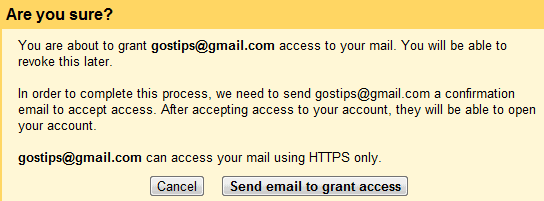
Google says that you can add up to 10 users that can access your Gmail account. They'll see your account in a drop-down, just like the accounts added to multiple sign-in. Email delegation and multiple sign-in may seem similar, but here are many differences:
* email delegation only works for Gmail, while multiple sign-in works for other Google services
* delegated accounts always show up in the drop-down, so you don't have to know the credentials
* email delegation shows a limited version of the Gmail interface that doesn't include features like Gmail Chat, Google Tasks, Google Buzz, Gmail Labs and doesn't let you change account settings
* email delegation requires the HTTPS version of Gmail.
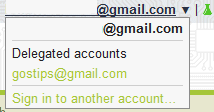
"Signing out of any one of the accounts will sign you out of all the accounts you're currently viewing, and, of course, you can revoke access at any time," explains Google.
Gmail's blog announced that email delegation is now available for all Gmail accounts. Just go to Settings > Accounts and Import and click on "Add account" in the "Grant access to your account" section. Enter the email address of the person you'd like to access your account and wait until he receives a verification email and confirms the request. If both accounts are yours it's even easier because you don't have to wait.
Google says that you can add up to 10 users that can access your Gmail account. They'll see your account in a drop-down, just like the accounts added to multiple sign-in. Email delegation and multiple sign-in may seem similar, but here are many differences:
* email delegation only works for Gmail, while multiple sign-in works for other Google services
* delegated accounts always show up in the drop-down, so you don't have to know the credentials
* email delegation shows a limited version of the Gmail interface that doesn't include features like Gmail Chat, Google Tasks, Google Buzz, Gmail Labs and doesn't let you change account settings
* email delegation requires the HTTPS version of Gmail.
"Signing out of any one of the accounts will sign you out of all the accounts you're currently viewing, and, of course, you can revoke access at any time," explains Google.
It's Easier to Link to a YouTube Timestamp
Tuesday, December 14, 2010 0 comments
Linking to a specific timestamp of a YouTube video is not a new feature: you only need to append #t=1m30s or #t=90s to a YouTube URL to skip the first 89 seconds of the video (here's an example).
Now you no longer have to manually add the special parameter to the URL. Just right-click on the video and select "Copy video URL at current time". It's probably a good idea to pause the video before using this feature.

Now you no longer have to manually add the special parameter to the URL. Just right-click on the video and select "Copy video URL at current time". It's probably a good idea to pause the video before using this feature.
Google Latitude App for iPhone
Monday, December 13, 2010 0 comments
Google has finally released a native iPhone app for Google Latitude. The web app is nice, but you can't use it to update your location in the background. Google Latitude for iPhone uses one of the new features in iOS 4 that allows applications to track your location even if they aren't in the foreground. That's the main reason why it requires an iPhone 3GS, iPhone 4 or iPad 3G running iOS 4. (Update: According to Google, "the Google Latitude app will run on the iPhone 3GS, iPhone 4, iPad, and iPod touch (3rd/4th generation). However, background location updating is only supported on the iPhone 3GS, iPhone 4, and iPad 3G.")
The native app is better because it shows more information about the locations of your friends and it sends you to the map view when you click on a friend, but the web app is just a layer in Google Maps and this makes a lot of sense. Google Latitude should not be a standalone app, it should integrate with Google Maps and Google Contacts, so you can quickly find your friends.

Marissa Mayer, Google's VP of geographic and local services, has recently said that Google Latitude will add explicit check-ins, inspired by Foursquare. "Latitude is useful for a smaller group of people. Only a handful of people you'll want to know where you are at all times. There will be new layers coming on top of it. It's more useful when more people are on it. And implicit and explicit — yes, the check-in. Maybe that's in Latitude or maybe it's in Maps."
The native app is better because it shows more information about the locations of your friends and it sends you to the map view when you click on a friend, but the web app is just a layer in Google Maps and this makes a lot of sense. Google Latitude should not be a standalone app, it should integrate with Google Maps and Google Contacts, so you can quickly find your friends.
Marissa Mayer, Google's VP of geographic and local services, has recently said that Google Latitude will add explicit check-ins, inspired by Foursquare. "Latitude is useful for a smaller group of people. Only a handful of people you'll want to know where you are at all times. There will be new layers coming on top of it. It's more useful when more people are on it. And implicit and explicit — yes, the check-in. Maybe that's in Latitude or maybe it's in Maps."
Win a Chrome OS Notebook
0 comments
When I started this blog, Google Operating System was just a metaphor for a future when Google's apps will make your operating system irrelevant. We're not yet there, but we're close and Chrome OS is an attempt to show what's possible right now.
If you'd like to try an early version of Chrome OS on a notebook that's optimized for Chrome OS, post a short essay on the future of computing in a comment and you can win a Cr-48 Chrome notebook.
Here are the rules:
1. This competition is only open to USA residents. Google can't ship the notebook outside USA due to product certification requirements.
2. You must be 18 years of age or older.
3. Your essay must be original and it must be written in English.
4. You should a include a way to contact you: a link to your Google profile, a link to your website, a link to your Twitter account etc.
5. If you win the notebook, you're expected to use it regularly and send your feedback to Google.
6. The competition ends 1:59pm Pacific Time on December 14.
7. Only one of you will win the notebook.
Good luck!

Update (December 14): Thank you for all your great comments. I'll announce the winner tomorrow.
Update 2: We have a winner.
If you'd like to try an early version of Chrome OS on a notebook that's optimized for Chrome OS, post a short essay on the future of computing in a comment and you can win a Cr-48 Chrome notebook.
Here are the rules:
1. This competition is only open to USA residents. Google can't ship the notebook outside USA due to product certification requirements.
2. You must be 18 years of age or older.
3. Your essay must be original and it must be written in English.
4. You should a include a way to contact you: a link to your Google profile, a link to your website, a link to your Twitter account etc.
5. If you win the notebook, you're expected to use it regularly and send your feedback to Google.
6. The competition ends 1:59pm Pacific Time on December 14.
7. Only one of you will win the notebook.
Good luck!
Update (December 14): Thank you for all your great comments. I'll announce the winner tomorrow.
Update 2: We have a winner.
Subscribe to:
Posts (Atom)


